



The accuracy of a Spo2 (Oxygen Saturation) probe is a critical factor that determines its reliability in measuring the oxygen saturation level in the blood. As a supplier of Creative Spo2 Probes, I am often asked about the accuracy of these devices. In this blog post, I will delve into the concept of accuracy in Spo2 probes, explain how it is measured, and discuss the factors that can affect the accuracy of the Creative Spo2 Probe.
Understanding Spo2 and Its Measurement
Before we discuss the accuracy of the Creative Spo2 Probe, it is essential to understand what Spo2 is and how it is measured. Spo2 is the percentage of oxygen-saturated hemoglobin in the blood relative to the total amount of hemoglobin (both saturated and unsaturated). It is a crucial physiological parameter that provides valuable information about a person's respiratory and circulatory function.
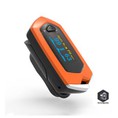
Spo2 is typically measured non - invasively using a pulse oximeter, which consists of a probe and a monitor. The probe is usually a clip that is attached to a finger, toe, or earlobe. It contains two light - emitting diodes (LEDs) that emit light at different wavelengths (usually red and infrared) and a photodetector that measures the amount of light absorbed by the blood. The ratio of the absorption of red and infrared light is then used to calculate the Spo2 value.
How Accuracy is Defined in Spo2 Probes
The accuracy of a Spo2 probe is typically defined by the deviation of the measured Spo2 values from the actual Spo2 values. In the medical field, the accuracy of a Spo2 probe is often expressed in terms of the mean error and the standard deviation of the error.


The mean error is the average difference between the measured Spo2 values and the actual Spo2 values over a large number of measurements. A small mean error indicates that, on average, the probe is measuring the Spo2 values accurately. The standard deviation of the error measures the variability of the errors around the mean error. A small standard deviation indicates that the errors are consistent and that the probe is reliable.
For example, a Spo2 probe with a mean error of ± 2% and a standard deviation of ± 1% means that, on average, the measured Spo2 values are within 2% of the actual Spo2 values, and most of the measurements (about 68% according to the normal distribution) are within 1% of the mean error.
Factors Affecting the Accuracy of the Creative Spo2 Probe
Several factors can affect the accuracy of the Creative Spo2 Probe. Understanding these factors can help users ensure accurate measurements and interpret the results correctly.
1. Motion Artifact
Motion of the patient can cause significant errors in Spo2 measurements. When a patient moves, the light path between the LEDs and the photodetector can be disrupted, leading to inaccurate absorption measurements. The Creative Spo2 Probe is designed with advanced motion - compensation algorithms to minimize the effects of motion artifact. However, excessive or rapid movement can still affect the accuracy of the measurements.
2. Poor Perfusion
Perfusion refers to the blood flow through the tissue where the probe is attached. Poor perfusion, such as in cases of low blood pressure, hypothermia, or peripheral vascular disease, can reduce the accuracy of Spo2 measurements. When perfusion is poor, there may not be enough blood in the tissue to provide a reliable signal. The Creative Spo2 Probe is optimized to work with a wide range of perfusion levels, but extremely poor perfusion can still pose challenges.
3. Ambient Light
Ambient light can interfere with the light signals emitted by the LEDs in the probe. If the ambient light is too bright, it can saturate the photodetector and make it difficult to measure the absorption of the red and infrared light accurately. To minimize the effects of ambient light, the Creative Spo2 Probe is designed with light - shielding materials and filters.
4. Skin Pigmentation
Skin pigmentation can affect the absorption of light in the tissue. Darker skin pigmentation may absorb more light, which can potentially lead to errors in Spo2 measurements. However, the Creative Spo2 Probe is calibrated to work with a variety of skin tones to ensure accurate measurements across different populations.
Accuracy Testing of the Creative Spo2 Probe
At our company, we conduct rigorous accuracy testing of the Creative Spo2 Probe to ensure its reliability. We use a combination of laboratory testing and clinical trials to evaluate the accuracy of the probe.
In the laboratory, we use a blood gas analyzer as the gold standard for measuring the actual Spo2 values. We compare the measurements of the Creative Spo2 Probe with the values obtained from the blood gas analyzer under controlled conditions. We also test the probe under different conditions, such as varying levels of motion, perfusion, and ambient light, to evaluate its performance in real - world scenarios.
In clinical trials, we test the probe on a large number of patients in different clinical settings. We collect data on the Spo2 measurements obtained from the probe and compare them with the reference values. This helps us to validate the accuracy of the probe in a real - patient population.
Our Product Range and Their Accuracy
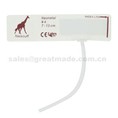
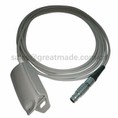
We offer a wide range of Creative Spo2 Probes, including the 511 - 10,934 - 10L Compatible Reusable Adult Finger Clip Spo2 Sensor, the Adult Finger Clip Spo2 Sensor Use for BCI, and the Compatible With Zoncare Spo2 Sensor. All of these probes are designed to provide accurate and reliable Spo2 measurements.
Each of our probes undergoes strict quality control procedures to ensure that they meet the highest standards of accuracy. We continuously improve our products based on the latest research and technological advancements to provide our customers with the best possible Spo2 measurement solutions.
Importance of Accurate Spo2 Measurement
Accurate Spo2 measurement is crucial in many clinical and non - clinical settings. In hospitals, it is used to monitor the oxygenation status of patients during surgery, in the intensive care unit, and in general wards. In home healthcare, it is used by patients with chronic respiratory diseases to monitor their condition and adjust their treatment accordingly.
Inaccurate Spo2 measurements can lead to misdiagnosis, inappropriate treatment, and potentially serious consequences for the patient. Therefore, using a reliable and accurate Spo2 probe, such as the Creative Spo2 Probe, is essential for ensuring the safety and well - being of patients.
Contact Us for Purchase and Consultation
If you are interested in purchasing our Creative Spo2 Probes or have any questions about their accuracy or performance, please feel free to contact us. We are committed to providing our customers with high - quality products and excellent customer service. Our team of experts is available to assist you with any technical or purchasing inquiries.
References
- Bravata DM, Olkin I, Olmstead EM, et al. Pulse oximetry for measuring oxygen saturation in acutely ill adults. JAMA. 2007;297(22):2543 - 2551.
- Hess DR. Pulse oximetry: principles and limitations. Respir Care. 2002;47(7):711 - 719.
- Ruchala KJ, Kelleher KJ, Suman VJ, et al. The effect of skin pigmentation on pulse oximetry accuracy. Anesth Analg. 2004;99(2):576 - 582.