


Hey there! As a supplier of pulse oximeters, I often get asked about the difference between a pulse oximeter and an electrocardiogram (ECG). So, I thought I'd break it down for you in a way that's easy to understand.
Let's start with the basics. A pulse oximeter is a small, handy device that you can usually clip onto your finger. It's super simple to use. All you gotta do is put your finger in it, and within seconds, it gives you two important readings: your blood oxygen saturation level (SpO₂) and your pulse rate.
The way it works is pretty cool. It uses light technology. There are two different wavelengths of light - red and infrared - that pass through your finger. Hemoglobin in your blood absorbs these lights differently depending on whether it's oxygen - rich or oxygen - poor. By measuring how much light is absorbed, the pulse oximeter can figure out your blood oxygen level. And it also detects the changes in blood volume with each heartbeat to calculate your pulse rate.
For example, if you're doing some intense exercise, your body needs more oxygen. A pulse oximeter can show you if your oxygen levels are dropping too low. Or if you're feeling a bit under the weather, like having a cold or a respiratory issue, it can help you keep an eye on your oxygen status at home.
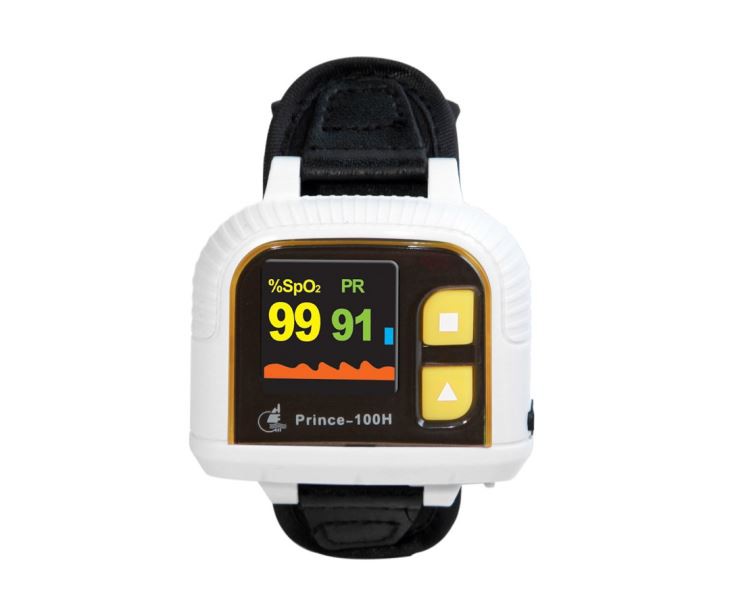
We offer some great pulse oximeters. Check out the Heal Force Prince - 100F Handheld Pulse Oximeter With Real - Time Measurements. It's a handheld model that gives you real - time readings, so you can always stay informed about your oxygen and pulse. And then there's the Bluetooth Portable Fingertip Pulse Oximeter. This one is really convenient because you can connect it to your smartphone via Bluetooth and store your data for later analysis. If you prefer something you can wear on your wrist, the Heal Force Prince - 100H OLED Wrist Color Pulse Oximeter is a great option. It has a color OLED display and is always with you to monitor your vital signs.
Now, let's talk about an electrocardiogram (ECG). An ECG is a bit more complex. It's mainly used to record the electrical activity of your heart. The heart has its own electrical system that controls the rhythm of your heartbeats. An ECG machine measures the tiny electrical signals that your heart produces as it beats.
To get an ECG, you usually have to go to a medical facility. A technician will attach small electrodes to your chest, arms, and legs. These electrodes are connected to the ECG machine, which then records the electrical signals over a period of time. The result is a graph with different waves and intervals that doctors can analyze.
Doctors use ECGs to detect all sorts of heart problems. For instance, if you're having chest pain, an ECG can show if you're having a heart attack. It can also detect arrhythmias, which are irregular heart rhythms. If your heart is beating too fast, too slow, or in an abnormal pattern, an ECG can pick it up.
So, what are the main differences between a pulse oximeter and an ECG?

First, their functions are different. A pulse oximeter focuses on your oxygen levels and pulse rate. It's more about the oxygen supply in your body and how fast your heart is pumping blood. On the other hand, an ECG is all about the electrical activity of your heart. It helps diagnose heart - related electrical problems.
Second, their usage scenarios vary. A pulse oximeter is great for personal use at home. You can use it anytime you want to check your basic vital signs. It's especially useful for people with chronic respiratory diseases like asthma or COPD. An ECG, however, is mostly used in a medical setting by trained professionals. You need someone to attach the electrodes correctly and interpret the results.
Third, the information they provide is different. A pulse oximeter gives you a couple of simple numbers - your oxygen level and pulse rate. An ECG provides a detailed graph of your heart's electrical activity, which requires medical knowledge to understand.
In terms of cost, a pulse oximeter is usually much cheaper. You can buy a good quality pulse oximeter for a few dollars to a couple of hundred dollars. An ECG machine, on the other hand, is expensive and is a large - scale medical device that hospitals and clinics invest in.
In conclusion, both a pulse oximeter and an ECG are important tools for monitoring health, but they serve different purposes. A pulse oximeter is a practical and affordable way for individuals to keep an eye on their oxygen and pulse at home. An ECG is a more in - depth diagnostic tool used by medical professionals to detect heart problems.
If you're interested in purchasing our high - quality pulse oximeters for personal use, medical facilities, or resale, we'd love to have a chat with you. Contact us to discuss your requirements and get the best deal.
References
- Medical textbooks on cardiology and respiratory medicine.
- Research papers on the use of pulse oximeters and ECGs in healthcare.