


As a supplier of Creative Spo2 Probes, I've encountered numerous inquiries from customers regarding the potential impact of electromagnetic fields (EMFs) on these devices. In this blog post, I aim to delve into this topic, providing a scientific and comprehensive analysis to address your concerns.
Understanding the Creative Spo2 Probe
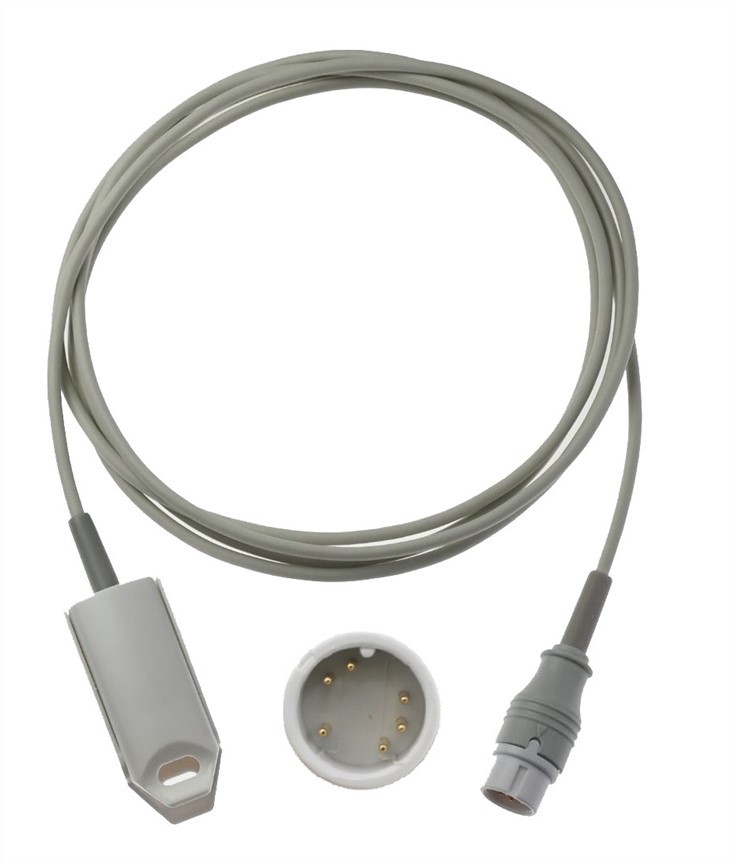
Before we discuss the influence of electromagnetic fields, it's essential to understand how the Creative Spo2 Probe functions. The probe is a crucial medical device used to measure oxygen saturation (SpO2) levels in the blood non - invasively. It operates on the principle of light absorption. The probe typically emits two wavelengths of light, usually red and infrared, through the tissue, such as a finger or an earlobe. Hemoglobin in the blood absorbs these lights differently depending on whether it is oxygenated or deoxygenated. By measuring the amount of light absorbed at each wavelength, the probe can calculate the SpO2 level.
Electromagnetic Fields: A Brief Overview
Electromagnetic fields are a combination of electric and magnetic fields that are produced by the movement of electric charges. They can be classified into two main types: non - ionizing and ionizing. Non - ionizing EMFs, such as those produced by power lines, electrical appliances, and wireless communication devices, have lower frequencies and energies. Ionizing EMFs, on the other hand, like X - rays and gamma rays, have higher frequencies and energies and can cause damage to living cells.
The Potential Impact of EMFs on the Creative Spo2 Probe
When it comes to the Creative Spo2 Probe, the main concern is the interference from non - ionizing EMFs. These fields can potentially disrupt the normal operation of the probe in several ways.
Electrical Interference
The probe contains electronic components that are sensitive to electrical signals. Strong electromagnetic fields can induce unwanted electrical currents in these components. For example, if the probe is placed near a high - power electrical device, the induced currents can interfere with the normal functioning of the light - emitting and light - detecting circuits. This interference may lead to inaccurate readings of the SpO2 levels.
Signal Disturbance
The probe communicates with the monitoring device through electrical signals. Electromagnetic fields can distort these signals, causing errors in the data transmission. For instance, in an environment with a lot of wireless communication devices, the radiofrequency electromagnetic fields can interfere with the signal between the probe and the monitor, resulting in unstable or incorrect SpO2 readings.
Scientific Studies on EMF Interference with Spo2 Probes
Several scientific studies have been conducted to investigate the impact of electromagnetic fields on medical devices, including Spo2 probes. A study published in a well - known medical journal found that certain types of electromagnetic interference could cause significant errors in SpO2 measurements. The researchers exposed Spo2 probes to different levels of electromagnetic fields and monitored the changes in the measured SpO2 values. They discovered that in some cases, the interference could lead to deviations of up to 5% in the SpO2 readings, which is a significant error in a medical context.
Mitigating the Impact of EMFs
As a supplier, we are well - aware of the potential issues caused by electromagnetic fields, and we have taken several measures to minimize their impact on our Creative Spo2 Probes.
Shielding
We use high - quality shielding materials in the design of our probes. These materials can block or reduce the penetration of electromagnetic fields into the internal components of the probe. By creating a protective barrier, we can prevent the induced electrical currents and signal disturbances from affecting the probe's performance.
Filtering Circuits
Our probes are equipped with advanced filtering circuits. These circuits can filter out the unwanted electrical signals caused by electromagnetic interference. They are designed to allow only the relevant signals related to the SpO2 measurement to pass through, ensuring the accuracy and stability of the readings.
Real - World Applications and Compatibility
Our Creative Spo2 Probes are designed to be highly versatile and compatible with a wide range of medical monitoring devices. For example, they are Compatible With Zoncare Spo2 Sensor. This compatibility allows healthcare providers to use our probes with existing Zoncare monitoring systems without any compatibility issues.
In addition, our probes can also Use With Nihon Kohden Adult spo2 Sensor. This means that they can be integrated into Nihon Kohden's advanced medical monitoring platforms, providing accurate SpO2 measurements in various clinical settings.
Moreover, our probes are Compatible MASIM Rainbow SpO2 Sensor. This compatibility extends the usability of our probes to MASIM Rainbow systems, which are widely used in many healthcare facilities.
Conclusion and Call to Action
In conclusion, while electromagnetic fields can potentially affect the performance of the Creative Spo2 Probe, we have taken comprehensive measures to minimize this impact. Our probes are designed with advanced shielding and filtering technologies to ensure accurate and reliable SpO2 measurements even in environments with electromagnetic interference.
If you are in the market for high - quality Spo2 probes that are reliable and compatible with various monitoring systems, we invite you to contact us for procurement and further discussions. We are committed to providing the best products and services to meet your needs.

References
- [Name of the medical journal where the EMF interference study was published], [Year of publication], [Volume], [Pages]
- Textbook on medical device electronics, [Author], [Publisher], [Year]
- Research report on electromagnetic compatibility of medical devices, [Research institution], [Year]