


As a supplier of Metal Free Socket FHG, I often get asked about the shock resistance of our products. In this blog post, I'll delve into what shock resistance means for Metal Free Socket FHG and why it's a crucial factor in its performance.
Understanding Shock Resistance
Shock resistance refers to the ability of a product to withstand sudden and intense impacts without suffering significant damage or loss of functionality. For Metal Free Socket FHG, which is commonly used in various industrial and electrical applications, shock resistance is essential to ensure reliable and long - lasting performance.
In industrial settings, equipment is often subject to vibrations, drops, and accidental impacts. A socket that can't withstand these shocks may experience internal damage, such as broken contacts or loose components. This can lead to intermittent connections, signal loss, or even complete failure of the device it's connected to.
Factors Affecting the Shock Resistance of Metal Free Socket FHG
Material Composition
The materials used in the construction of Metal Free Socket FHG play a vital role in its shock resistance. Our sockets are typically made from high - quality, durable plastics and polymers. These materials are carefully selected for their ability to absorb and distribute shock energy. For example, some of the polymers we use have excellent elasticity, which allows them to deform slightly under impact and then return to their original shape. This property helps prevent cracks and fractures that could compromise the socket's integrity.

Design Features
The design of Metal Free Socket FHG is also optimized for shock resistance. Our engineers have incorporated features such as reinforced walls and internal support structures. These design elements help to strengthen the socket and prevent it from collapsing or deforming under pressure. Additionally, the shape of the socket is designed to minimize stress concentrations during impact. For instance, rounded edges and smooth contours help to distribute the force of a shock more evenly across the socket's surface.
Manufacturing Process
The manufacturing process of Metal Free Socket FHG is another important factor. We use advanced injection - molding techniques to ensure consistent quality and precision in every socket we produce. This process allows us to create sockets with uniform wall thickness and high - density structures, which contribute to better shock resistance. During manufacturing, we also conduct rigorous quality control checks to identify and eliminate any potential weak points in the sockets.
Testing the Shock Resistance of Metal Free Socket FHG
To ensure that our Metal Free Socket FHG meets the highest standards of shock resistance, we conduct a series of comprehensive tests. These tests simulate real - world conditions that the sockets may encounter during their use.
One of the primary tests we perform is the drop test. In this test, sockets are dropped from a specified height onto a hard surface. We vary the height and the orientation of the drop to simulate different types of impacts. After each drop, the sockets are inspected for visible damage and their electrical performance is tested. If a socket fails to meet our performance criteria after a drop, it is rejected, and the manufacturing process is reviewed to identify any areas for improvement.
We also conduct vibration tests. Sockets are mounted on a vibration table and subjected to a range of frequencies and amplitudes. This test helps us to evaluate how well the sockets can withstand continuous vibrations without loosening or losing their electrical connections.
Applications and the Importance of Shock Resistance
The shock resistance of Metal Free Socket FHG makes it suitable for a wide range of applications. In the automotive industry, for example, these sockets are used in various electrical systems, such as lighting, sensors, and control units. In a moving vehicle, these components are constantly exposed to vibrations and shocks from the road. A socket with poor shock resistance could lead to electrical malfunctions, which can be dangerous and costly to repair.
In the aerospace industry, Metal Free Socket FHG is used in avionics systems. These systems are subjected to extreme conditions during flight, including rapid changes in altitude, temperature, and pressure, as well as mechanical shocks during takeoff and landing. The high shock resistance of our sockets ensures that they can maintain reliable connections in these demanding environments.
Our Product Range and Shock Resistance
We offer a diverse range of Metal Free Socket FHG products, each designed to meet specific application requirements. For example, our PHG 0K 1K 2K Waterproof IP68 Metal Female Free Cable Socket is not only shock - resistant but also waterproof. This makes it ideal for outdoor and marine applications where the socket may be exposed to water and harsh weather conditions in addition to shocks.
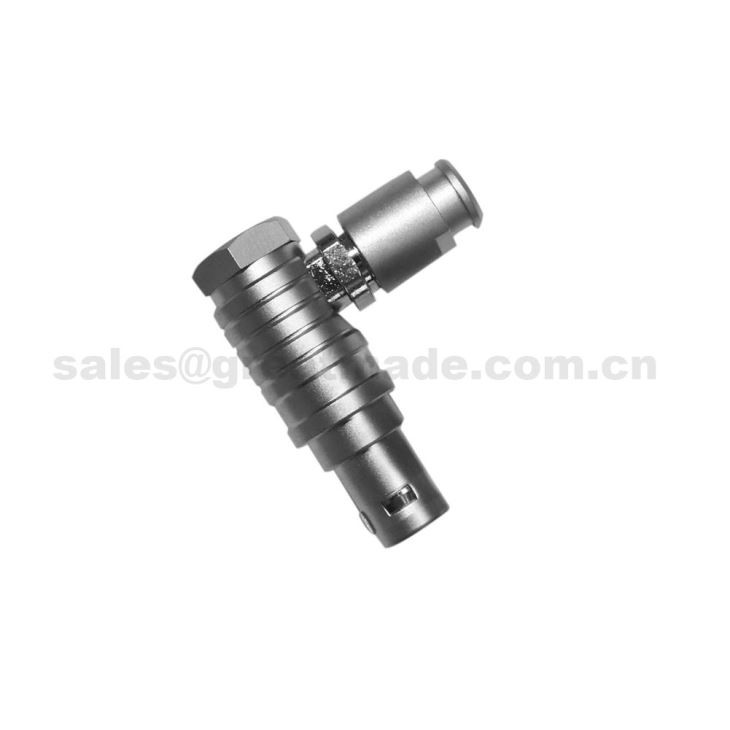
Another popular product in our range is the FHG Elbow Male Plug. This plug is designed with the same high - level shock resistance as our sockets, and its elbow shape provides flexibility in installation, especially in tight spaces.
Conclusion
The shock resistance of Metal Free Socket FHG is a critical feature that ensures its reliability and performance in a variety of challenging environments. Through careful material selection, innovative design, and rigorous testing, we are able to offer sockets that can withstand the shocks and vibrations they may encounter in real - world applications.
If you're in the market for high - quality, shock - resistant Metal Free Socket FHG products, we invite you to contact us for a detailed discussion about your specific needs. Our team of experts is ready to assist you in finding the right solutions for your projects. Whether you're in the automotive, aerospace, or any other industry, we can provide you with products that meet your exact requirements. Let's start a conversation about how our Metal Free Socket FHG can enhance the performance and reliability of your electrical systems.
References
- ASTM International. (20XX). Standard test methods for evaluating the mechanical properties of plastics.
- ISO Standards. (20XX). International standards for electrical connectors and sockets.
- Engineering Materials Handbook. (20XX). A comprehensive guide to materials used in industrial applications.