


When it comes to respiratory treatments, nebulizers play a crucial role in delivering medication directly to the lungs. Two common types of nebulizers are mesh nebulizers and jet nebulizers. As a mesh nebulizer supplier, I am well - versed in the features and differences between these two types of devices. In this blog, I'll delve into the details of mesh and jet nebulizers, highlighting their unique characteristics, advantages, and disadvantages.
Working Principle
The fundamental difference between a mesh nebulizer and a jet nebulizer lies in their working principles.
A jet nebulizer operates on the principle of air compression. It uses a compressor to force air at high speed through a narrow opening, creating a low - pressure area. This low - pressure area then draws the liquid medication from a reservoir, breaking it into small droplets. These droplets are then inhaled by the patient. The process is relatively simple but can be noisy due to the operation of the compressor.
On the other hand, a mesh nebulizer utilizes a vibrating mesh or a piezoelectric element. The mesh has tiny holes through which the liquid medication is forced. When the mesh vibrates, it transforms the liquid into a fine mist. This technology is more advanced and generally results in a quieter operation compared to jet nebulizers. For example, our Handheld Medical Nebulizer uses this mesh - based technology to provide a silent and efficient nebulization experience.
Particle Size
Particle size is a critical factor in nebulizer performance as it determines how effectively the medication reaches the target areas in the lungs.
Jet nebulizers typically produce a wider range of particle sizes. Larger particles may be deposited in the upper respiratory tract, while smaller particles can reach the lower lungs. However, the variability in particle size can sometimes lead to inconsistent medication delivery.
Mesh nebulizers, in contrast, are capable of producing a more uniform particle size. This means that a higher percentage of the medication can reach the deep lungs, where it is often needed most. The consistent particle size distribution of mesh nebulizers makes them more efficient in delivering medication, especially for conditions such as asthma and chronic obstructive pulmonary disease (COPD). Our Kids Adult Mini Machine Handheld Inhale Nebulizer is designed to provide a precise and uniform particle size, ensuring optimal treatment for both children and adults.
Medication Efficiency
Medication efficiency is another important aspect to consider when comparing these two types of nebulizers.
Jet nebulizers can waste a significant amount of medication. During the nebulization process, some of the medication may be lost as it adheres to the walls of the nebulizer chamber or is expelled into the air. This means that patients may need to use more medication to achieve the desired therapeutic effect.
Mesh nebulizers are generally more efficient in terms of medication use. They can deliver a higher percentage of the medication to the lungs, reducing waste. This not only saves on medication costs but also ensures that patients receive the full dose of the prescribed medication. For instance, our Atomizerultrasonic Handheld Atomizer For Adults And Children is engineered to maximize medication efficiency, providing a cost - effective solution for respiratory treatments.
Portability
In today's fast - paced world, portability is a key consideration for many patients.
Jet nebulizers are usually bulkier and require a power source, typically an electrical outlet. This makes them less convenient for use outside of the home. The compressor unit can be heavy and difficult to carry around, limiting their usability for patients who are frequently on the go.
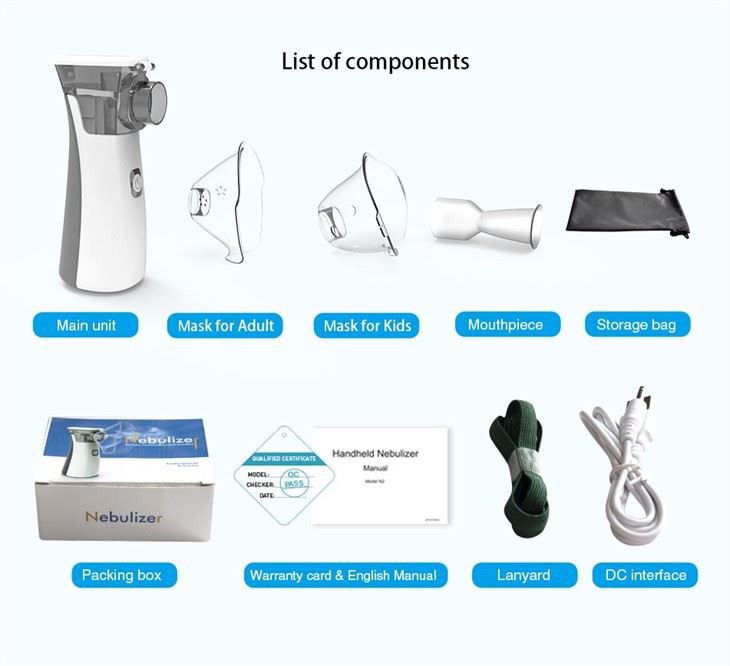
Mesh nebulizers, on the other hand, are often more portable. Many mesh nebulizers are battery - operated and compact in size. They can easily fit into a handbag or a pocket, allowing patients to use them wherever they are. This portability is especially beneficial for patients who need to take their nebulizer with them during travel or daily activities.

Noise Level
Noise can be a significant concern, especially for patients who are using nebulizers in quiet environments or for children who may be sensitive to loud sounds.
Jet nebulizers are known for their relatively high noise levels. The operation of the compressor can produce a loud, continuous humming sound, which can be disturbing for both the patient and those around them.
Mesh nebulizers are much quieter. The vibrating mesh technology produces very little noise, making the nebulization process more comfortable and less disruptive. This is particularly important for patients who use nebulizers at night or in public places.
Cost
Cost is an important factor for both patients and healthcare providers.
Jet nebulizers are generally less expensive upfront. The compressor and the nebulizer chamber are relatively simple in design, which keeps the manufacturing costs down. However, over time, the cost of replacement parts and the higher medication waste can add up.
Mesh nebulizers may have a higher initial cost. The advanced technology and precision manufacturing involved in producing the vibrating mesh contribute to the higher price. Nevertheless, the long - term savings from reduced medication waste and lower maintenance costs can offset the initial investment.
Ease of Use and Maintenance
Ease of use and maintenance are also crucial considerations.
Jet nebulizers require regular cleaning of the compressor and the nebulizer chamber to prevent the buildup of bacteria and debris. The compressor filter may also need to be replaced periodically. Additionally, the tubing and mouthpieces need to be properly cleaned and stored to ensure optimal performance.
Mesh nebulizers are generally easier to clean and maintain. They have fewer parts, and the mesh can usually be easily removed and cleaned. Some mesh nebulizers even come with self - cleaning functions, further simplifying the maintenance process.
Conclusion
In conclusion, both mesh nebulizers and jet nebulizers have their own unique features and advantages. Jet nebulizers are a more traditional option, offering a relatively low - cost solution with a proven track record. However, they have limitations in terms of noise, portability, medication efficiency, and particle size consistency.
Mesh nebulizers, on the other hand, represent a more advanced and efficient technology. They offer quieter operation, better medication delivery, higher portability, and easier maintenance. As a mesh nebulizer supplier, I believe that mesh nebulizers are the future of respiratory treatment, providing patients with a more effective and convenient way to manage their respiratory conditions.
If you are interested in learning more about our mesh nebulizers or are considering a purchase for your patients or yourself, we encourage you to reach out to us for a detailed discussion. We can provide you with more information on our products, pricing, and how they can best meet your specific needs.
References
- Gonda, I. (1990). Aerosol particle deposition in the respiratory tract: basic experimental facts and implications for therapy. Journal of Aerosol Medicine, 3(1), 1-24.
- Newman, S. P., & Clarke, S. W. (1984). Nebulizers: from theory to practice. Thorax, 39(9), 715-723.
- van der Grinten, C. P., de Jongste, J. C., & Lammers, J.-W. J. (2005). The role of particle size in the delivery of inhaled drugs. European Respiratory Journal, 25(6), 1046-1059.