




As a supplier of 10 - lead EKG leadwires, I've witnessed firsthand the importance of understanding the differences between various types of leadwires in the medical field. Electrocardiogram (EKG) leadwires are crucial components in recording the electrical activity of the heart. They transmit the heart's electrical signals from electrodes placed on the patient's body to the EKG machine for analysis. In this blog, we'll explore the unique features and differences of 10 - lead EKG leadwires compared to other types.

Basics of EKG Leadwires
Before delving into the differences, it's essential to understand the fundamental role of EKG leadwires. These wires are designed to provide a reliable connection between the patient and the EKG device. They come in different configurations, each tailored to specific clinical needs and the type of EKG machine they are used with.
The Structure of 10 - Lead EKG Leadwires
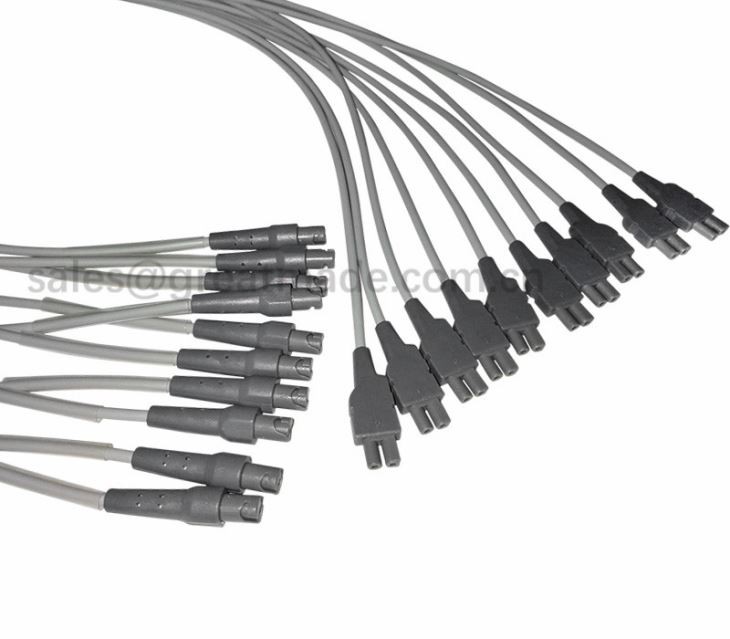
10 - lead EKG leadwires typically consist of a main cable that splits into ten individual wires, each attached to an electrode. These leads are carefully placed on the patient's body at specific locations to capture different views of the heart's electrical activity. The standard placement includes six chest leads (V1 - V6) and four limb leads (RA, LA, RL, LL). This configuration allows for a more comprehensive assessment of the heart's electrical function compared to some other types of leadwires.
Key Differences from Other Types
Number of Leads
One of the most obvious differences between 10 - lead EKG leadwires and other types is the number of leads. For example, some basic EKG systems may use only three or five leads. Three - lead systems are often used for basic rhythm monitoring, such as in general wards or during simple pre - operative assessments. They provide a limited view of the heart's electrical activity, mainly focusing on the overall rhythm. Five - lead systems offer a slightly more detailed view by adding a few more electrodes, but they still don't cover as much territory as the 10 - lead system.

In contrast, the 10 - lead EKG leadwires offer a more complete picture of the heart's electrical activity. The additional chest leads (V1 - V6) allow for the detection of more subtle changes in the heart's electrical patterns, which can be crucial in diagnosing various cardiac conditions, such as myocardial infarctions, arrhythmias, and conduction disorders.
Diagnostic Capability
Due to the increased number of leads, 10 - lead EKG leadwires have enhanced diagnostic capabilities. They can detect abnormalities that may be missed by other types of leadwires. For instance, a small area of myocardial damage may not be evident on a three - or five - lead EKG but can be detected by the more comprehensive 10 - lead system. The detailed information provided by the 10 - lead EKG can help cardiologists make more accurate diagnoses and develop appropriate treatment plans.

Compatibility
10 - lead EKG leadwires are designed to be compatible with a wide range of EKG machines. At our company, we offer a variety of 10 - lead EKG leadwires that are compatible with different brands and models of EKG devices. For example, we have the Comaptible GE CAM Universal Leadwire, which is designed to work seamlessly with GE CAM universal EKG machines. We also have the Compatible Welch Allyn ECG Leadwire Set For CP100 CP200, which is specifically tailored for Welch Allyn CP100 and CP200 EKG devices. Additionally, our Compatible GE Universal Leadwire 2001925 - 003 is compatible with a range of GE EKG machines, including the 1100, 1200, 1200st, and 5000 models.
Patient Comfort
Another difference lies in patient comfort. 10 - lead EKG leadwires are often designed with the patient's comfort in mind. The wires are usually made of soft, flexible materials that minimize discomfort during the EKG procedure. Additionally, the electrodes are designed to adhere to the skin gently, reducing the risk of skin irritation. In comparison, some other types of leadwires may be less flexible or have electrodes that are more likely to cause discomfort, especially during long - term monitoring.
Applications of 10 - Lead EKG Leadwires
10 - lead EKG leadwires are commonly used in a variety of clinical settings, including hospitals, clinics, and cardiac care units. They are particularly useful in situations where a detailed assessment of the heart's electrical activity is required, such as during the diagnosis of acute myocardial infarctions, the evaluation of arrhythmias, and the pre - operative assessment of patients with known or suspected cardiac diseases.
Advantages in Clinical Practice
In clinical practice, the use of 10 - lead EKG leadwires offers several advantages. Firstly, they provide a more accurate and detailed diagnosis, which can lead to better patient outcomes. Secondly, the compatibility of these leadwires with a wide range of EKG machines makes them a versatile choice for healthcare providers. Thirdly, the enhanced patient comfort reduces the likelihood of patient non - compliance during the EKG procedure, ensuring that accurate data is obtained.
Conclusion
In conclusion, 10 - lead EKG leadwires offer several distinct advantages over other types of leadwires. Their increased number of leads, enhanced diagnostic capabilities, wide compatibility, and patient comfort make them an excellent choice for healthcare providers who require a detailed assessment of the heart's electrical activity. If you're in the market for high - quality 10 - lead EKG leadwires, we invite you to contact us for a purchase negotiation. We're committed to providing you with the best products and services to meet your clinical needs.
References
- Goldberger, A. L., Goldberger, E. R., & Shvilkin, A. (2012). Clinical Electrocardiography: A Simplified Approach. Saunders.
- Marriott, H. J. L., & Conover, M. B. (2007). Marriott's Practical Electrocardiography. Lippincott Williams & Wilkins.