




Hey there! I'm a supplier of FHG Elbow Male Plugs, and I know how crucial it is to ensure the quality of these products upon arrival. Whether you're a distributor, an end - user, or someone in the middle of the supply chain, checking the quality of FHG Elbow Male Plugs right when they arrive can save you a lot of headaches down the line. In this blog, I'll share some practical steps on how to do just that.
1. Visual Inspection
The first and easiest step is a good old - fashioned visual inspection. When the FHG Elbow Male Plugs arrive, take a close look at them. Check for any obvious signs of damage, such as cracks, dents, or scratches on the outer surface. A damaged plug might not only look bad but could also affect its functionality.
Inspect the metal parts for corrosion. If you notice any rust or discoloration, it could be a sign of poor storage conditions or a problem with the material. The plastic parts should be smooth and free from any deformities. Make sure that the shape of the plug matches the specifications you ordered.
Also, check the markings on the plug. The part number, rating, and other important information should be clearly printed and legible. If the markings are faded or incorrect, it could indicate a counterfeit product or a manufacturing error.
2. Dimension Check
Next up is the dimension check. You'll need a set of measuring tools like calipers or a micrometer. Measure the key dimensions of the FHG Elbow Male Plug, such as the length, diameter, and the size of the threads. Compare these measurements with the product specifications.
Even a small deviation in dimensions can cause problems. For example, if the diameter of the plug is too large or too small, it might not fit properly into the corresponding socket, like the PHG 0K 1K 2K Waterproof IP68 Metal Female Free Cable Socket. This can lead to loose connections, which are a major source of electrical problems.
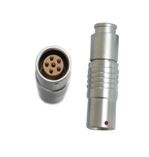

When measuring the threads, pay attention to the pitch and the thread profile. Incorrect threads can prevent the plug from screwing in smoothly or securely. If you find any significant differences in the dimensions, contact the supplier immediately.
3. Functionality Test
Now, let's move on to the functionality test. This is where you really put the FHG Elbow Male Plug to the test. First, try inserting it into a compatible socket. It should fit snugly and without any excessive force. If it's too loose or too tight, there could be an issue with the design or the manufacturing process.
Once it's inserted, check the electrical connection. You can use a multimeter to measure the resistance or continuity. The readings should match the expected values based on the product specifications. If there's a high resistance or no continuity at all, it could mean that there's a break in the electrical path inside the plug.
If the FHG Elbow Male Plug is designed to be waterproof, perform a simple water test. You can submerge the plug in water (up to the specified depth and for the recommended time) and then check for any signs of water ingress. Look for moisture inside the plug or on the contacts. A waterproof plug that fails this test is clearly not up to par.
4. Material Analysis
If you have the means, it's a good idea to conduct a material analysis. You can use techniques like spectroscopy or hardness testing to determine the quality of the materials used in the FHG Elbow Male Plug.
The metal parts should be made of high - quality alloys that offer good conductivity and corrosion resistance. The plastic parts should be made of durable and heat - resistant materials. If the materials are of poor quality, the plug is likely to have a shorter lifespan and may not perform as expected.
However, material analysis can be a bit technical and may require specialized equipment. If you don't have the resources to do it yourself, you can send samples to a third - party testing laboratory. They can provide you with a detailed report on the material composition and quality.
5. Packaging and Documentation
Don't forget to check the packaging and documentation. The FHG Elbow Male Plugs should be well - packaged to prevent damage during transit. Look for any signs of rough handling, such as torn boxes or damaged padding.
The packaging should also include all the necessary documentation, such as the product manual, warranty card, and test reports. The test reports can give you valuable information about the quality control measures that were taken during the manufacturing process. If any of the documentation is missing or incomplete, it could be a red flag.
6. Batch Comparison
If you've received a batch of FHG Elbow Male Plugs, it's a good idea to compare different units within the batch. Check for any variations in appearance, dimensions, or functionality. A consistent batch is a sign of good manufacturing processes.
If you notice significant differences between the units, it could indicate a problem with the production line. For example, there might be a change in the raw materials or a malfunction in the manufacturing equipment. In such cases, you may want to request additional testing or consider returning the entire batch.
Conclusion
Checking the quality of FHG Elbow Male Plugs upon arrival is a multi - step process that requires attention to detail. By following these steps, you can ensure that you're getting a high - quality product that meets your requirements.
If you're in the market for FHG Elbow Male Plugs or have any questions about the quality checking process, feel free to reach out. We're here to provide you with the best products and support. Check out our FHG Elbow Male Plug product page for more information.
References
- General knowledge on electrical connector quality control
- Product specifications of FHG Elbow Male Plugs and related sockets