


Hey there! As a supplier of temperature probes, I often get asked if our products can be used in the textile manufacturing process. Well, the short answer is yes! In this blog post, I'll dive into the details of how temperature probes can play a crucial role in textile manufacturing, and why you might want to consider using them in your operations.

Why Temperature Matters in Textile Manufacturing
Textile manufacturing is a complex process that involves several stages, from fiber production to fabric finishing. At each stage, temperature can have a significant impact on the quality and properties of the textiles being produced.
For example, during the spinning process, where fibers are twisted together to form yarn, the temperature can affect the strength and elasticity of the yarn. If the temperature is too high, the fibers can become brittle and break, leading to lower-quality yarn. On the other hand, if the temperature is too low, the fibers may not bond properly, resulting in a weaker yarn.
In the dyeing and printing processes, temperature is also a critical factor. Different dyes and printing techniques require specific temperature ranges to achieve the desired color and pattern. If the temperature is not controlled accurately, the colors may fade or bleed, and the patterns may not be sharp or consistent.
Even in the finishing process, where fabrics are treated to improve their appearance, feel, and performance, temperature plays a role. For instance, heat setting is a common finishing technique used to stabilize the shape and dimensions of fabrics. The temperature and duration of the heat setting process can affect the fabric's shrinkage, wrinkle resistance, and durability.
How Temperature Probes Can Help
So, how can temperature probes help in the textile manufacturing process? Well, they provide accurate and real-time temperature measurements, which are essential for maintaining consistent quality and optimizing production efficiency.
Monitoring and Control
Temperature probes can be installed at various points in the manufacturing process to monitor the temperature continuously. This allows operators to detect any deviations from the desired temperature range and take corrective actions immediately. For example, if the temperature in a dyeing vat is too high, the operator can adjust the heating system to bring it back to the optimal level.
Process Optimization
By analyzing the temperature data collected by the probes, manufacturers can identify areas where the process can be optimized. For instance, they may discover that a particular step in the manufacturing process can be completed at a lower temperature without sacrificing quality. This can lead to energy savings, reduced production costs, and increased productivity.
Quality Assurance
Accurate temperature control is crucial for ensuring the quality of the final product. Temperature probes can help manufacturers meet the strict quality standards required by the textile industry. By providing reliable temperature measurements, they can help prevent defects, reduce waste, and improve customer satisfaction.
Types of Temperature Probes Suitable for Textile Manufacturing
There are several types of temperature probes available, each with its own advantages and disadvantages. Here are some of the most common types used in textile manufacturing:
Thermocouples
Thermocouples are one of the most widely used types of temperature probes. They are relatively inexpensive, durable, and can measure a wide range of temperatures. Thermocouples work by generating a voltage proportional to the temperature difference between two junctions. They are suitable for applications where high accuracy is not required, such as monitoring the temperature of large vats or ovens.
Resistance Temperature Detectors (RTDs)
RTDs are more accurate than thermocouples and can provide precise temperature measurements. They work by measuring the change in electrical resistance of a metal wire as the temperature changes. RTDs are commonly used in applications where high accuracy is essential, such as in the dyeing and printing processes.
Infrared Temperature Sensors
Infrared temperature sensors measure the temperature of an object without making contact with it. They work by detecting the infrared radiation emitted by the object. Infrared sensors are useful for measuring the temperature of moving objects or objects that are difficult to access, such as fabrics on a conveyor belt.
Our Temperature Probe Products
As a temperature probe supplier, we offer a wide range of products suitable for the textile manufacturing process. Here are some of our popular products:
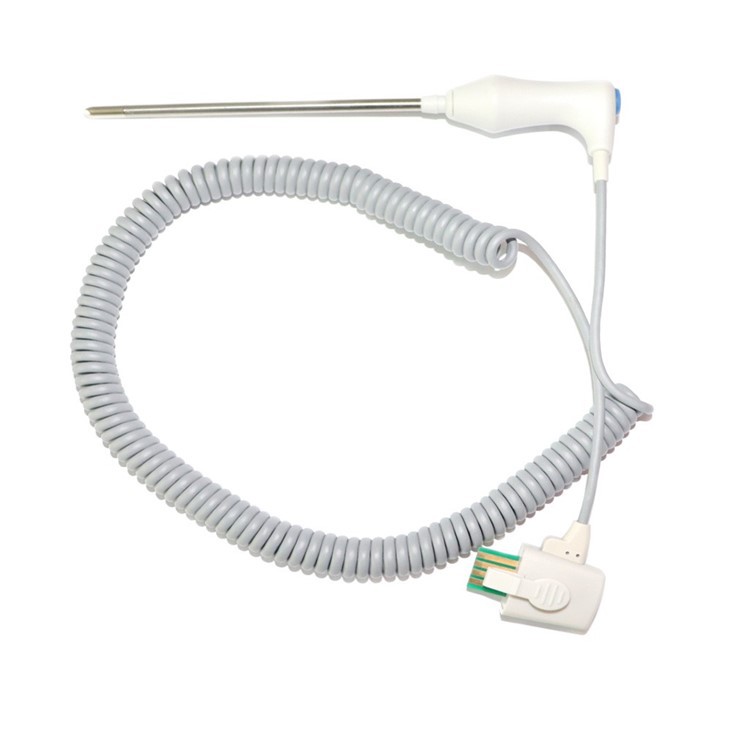
- Atom Compatible Temperature Probe: This probe is designed to be compatible with Atom temperature controllers, providing accurate and reliable temperature measurements. It is suitable for a variety of applications, including dyeing, printing, and heat setting.
- Oral Temperature Probe for Welch Allyn: This probe is specifically designed for use with Welch Allyn temperature monitoring systems. It is ideal for applications where high accuracy and reliability are required, such as in the quality control of textile products.
- Dual Temperature Cable For 400 Series Probe: This cable allows you to connect two temperature probes to a single 400 series temperature controller. It is useful for monitoring the temperature at two different points in the manufacturing process simultaneously.
Contact Us for Procurement
If you're interested in using temperature probes in your textile manufacturing process, we'd love to hear from you. Our team of experts can help you choose the right temperature probes for your specific needs and provide you with technical support and training.
Whether you're a small textile manufacturer or a large-scale production facility, we can offer you competitive pricing and excellent customer service. So, don't hesitate to contact us to discuss your requirements and get a quote.
References
- Textile Manufacturing Handbook: A Comprehensive Guide to the Textile Industry, edited by John Smith.
- Temperature Measurement and Control in Industrial Processes, by David Johnson.
- The Role of Temperature in Textile Dyeing and Printing, by Mary Brown.