


Hey there! As a supplier of pulse oximeters, I often get asked a bunch of questions about how these nifty devices work and where they can be used. One question that pops up quite a bit is, "Can a pulse oximeter be used on patients with carbon monoxide poisoning?" Let's dig into this topic and find out.
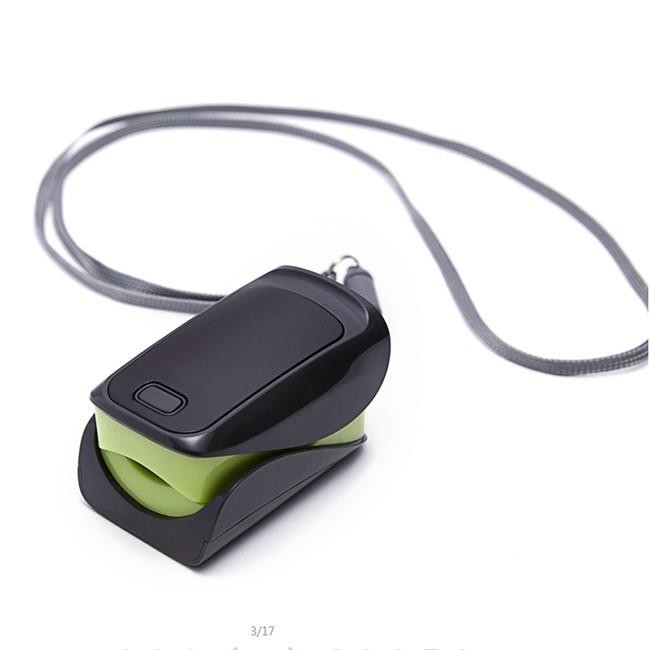
First off, let's quickly go over what a pulse oximeter does. A pulse oximeter is a small, non - invasive device that clips onto your finger (or sometimes other body parts like the earlobe). It measures two important things: your pulse rate (how many times your heart beats per minute) and your oxygen saturation level (SpO2), which is the percentage of oxygen in your blood.
We've got a great range of pulse oximeters. For instance, the Baby Pediatric Finger Pulse Oximeter is specially designed for the little ones. It's gentle and accurate, making it perfect for monitoring a baby's oxygen levels. Then there's the Portable Fingertip Pulse Oximeter, which is super handy for on - the - go use. You can take it with you anywhere, whether you're hiking in the mountains or just keeping an eye on your health at home. And if you're looking for something with a high - tech display, the OLED Spo2 Fingertip Pulse Oximeter offers a clear and easy - to - read OLED screen.

Now, back to the main question: carbon monoxide poisoning. Carbon monoxide (CO) is a colorless, odorless, and tasteless gas that can be really dangerous. When you breathe in CO, it binds to hemoglobin in your blood much more readily than oxygen does. Hemoglobin is the protein in red blood cells that carries oxygen around your body. Once CO attaches to hemoglobin, it forms carboxyhemoglobin (COHb).
Here's the problem with using a regular pulse oximeter on a patient with carbon monoxide poisoning. Pulse oximeters work by shining two different wavelengths of light through your finger (usually red and infrared). They measure how much of each wavelength is absorbed by your blood. Based on the absorption ratio, the oximeter calculates your SpO2 level.
However, a regular pulse oximeter can't tell the difference between oxygen - bound hemoglobin (oxyhemoglobin) and carboxyhemoglobin. Since COHb absorbs light in a similar way to oxyhemoglobin, the oximeter may give a falsely normal or only slightly decreased SpO2 reading in patients with CO poisoning.
Let me give you an example. Say a patient has a high level of COHb in their blood due to carbon monoxide poisoning. The pulse oximeter might show an SpO2 level of around 95%, which seems okay at first glance. But in reality, the patient's oxygen delivery to their tissues could be severely compromised because a large portion of their hemoglobin is bound to CO instead of oxygen.
So, in short, a regular pulse oximeter isn't very reliable for accurately assessing oxygenation in patients with carbon monoxide poisoning. For a more accurate diagnosis, a device called a co - oximeter is needed. A co - oximeter can measure not only SpO2 but also the levels of COHb and other abnormal hemoglobins. It uses multiple wavelengths of light to distinguish between different types of hemoglobin.
But that doesn't mean pulse oximeters are completely useless in cases related to carbon monoxide. In a pre - hospital or emergency setting where a co - oximeter isn't immediately available, a pulse oximeter can still provide some basic information. It can give an idea of the patient's pulse rate, which is important in assessing the overall cardiovascular status. Even if the SpO2 reading is inaccurate, a change in the pulse oximeter's reading over time can indicate a worsening or improving condition.
Also, in some situations where carbon monoxide exposure is suspected but not confirmed, a pulse oximeter can be a first - step screening tool. If the SpO2 reading is normal, it doesn't rule out CO poisoning, but a very low SpO2 reading could suggest other underlying problems that need further investigation.
In a healthcare facility, once a patient with suspected CO poisoning arrives, the first step is usually to start high - flow oxygen therapy. This helps to displace the CO from the hemoglobin and increase the amount of oxygen available for the body. During this treatment, a co - oximeter is used to monitor the patient's COHb levels and the effectiveness of the oxygen therapy.
As a pulse oximeter supplier, I understand the importance of having the right tools for different medical situations. While our pulse oximeters have their limitations in carbon monoxide poisoning cases, they are still valuable in many other scenarios. They're great for general health monitoring, for example, in patients with chronic obstructive pulmonary disease (COPD), asthma, or during physical activities to keep track of your fitness level.
If you're in the market for a reliable pulse oximeter, whether it's for personal use or for a medical facility, we've got you covered. Our products are known for their accuracy, durability, and user - friendly design. We're always looking to build long - term relationships with our customers. If you're interested in learning more about our pulse oximeters or have any questions about how they can fit into your needs, don't hesitate to reach out. We're here to help you make the right choice.
So, if you're thinking about purchasing pulse oximeters for your home, clinic, or hospital, get in touch with us for a discussion. We can provide you with detailed product information, pricing, and any other support you might need. Let's work together to ensure you have the best pulse oximeter solution for your specific requirements.
References
- "Medical Devices: A Practical Guide for Clinicians" by R. A. McLeod
- "Respiratory Care Practice" by R. W. Wilkins, J. K. Stoller, and R. M. Kacmarek