


Hey there! As a supplier of pulse oximeters, I often get asked a bunch of questions about how our devices work and who can use them. One question that pops up quite a bit is, "Can a pulse oximeter be used on patients with arthritis?" Well, let's dive right into it and find out.
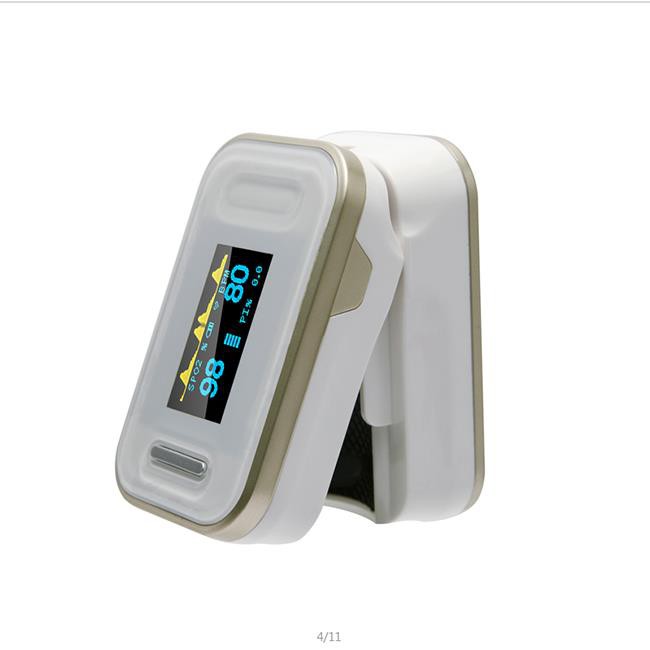
First off, let's quickly go over what a pulse oximeter is. It's a small, handy device that measures the oxygen saturation level in your blood and your heart rate. You just clip it onto your finger, and in a few seconds, it gives you the readings. Simple, right? We've got different types of pulse oximeters in our range, like the Handheld SPO2 PR Monitor Finger Pulse Oximeter, the Children Finger Pulse Oximeter Prince - 100D, and the Fingertip Pulse Oximeter Prince - 100N.

Now, let's talk about arthritis. Arthritis is a condition that causes inflammation in the joints, leading to pain, stiffness, and swelling. There are different types of arthritis, like osteoarthritis and rheumatoid arthritis. People with arthritis often have difficulty with simple tasks that involve using their hands, like gripping things or bending their fingers.
So, can a pulse oximeter be used on these patients? The short answer is yes, but there are a few things to keep in mind.
How Pulse Oximeters Work
Pulse oximeters work by shining light through your finger. The light passes through the blood vessels, and the device measures how much light is absorbed by the oxygen - carrying hemoglobin in your blood. Based on this, it calculates the oxygen saturation level.
For patients with arthritis, the main issue might be getting the pulse oximeter to fit properly on their fingers. Swollen or deformed fingers due to arthritis can make it a bit tricky. But most of our pulse oximeters are designed with adjustable clips. The Handheld SPO2 PR Monitor Finger Pulse Oximeter, for example, has a flexible clip that can be adjusted to fit different finger sizes. This means that even if a patient's fingers are a bit swollen, they should still be able to use the device.
Accuracy Concerns
Another thing people worry about is the accuracy of the readings. In general, as long as the pulse oximeter is placed correctly on the finger and there is good blood flow, the readings should be accurate. However, arthritis can sometimes affect blood circulation in the fingers. If the blood flow is restricted due to inflammation or joint damage, it might affect the accuracy of the readings.
To get the most accurate results, patients with arthritis should try to place the pulse oximeter on a finger that has the best blood flow. They can also try warming their hands before using the device. Warming the hands can help improve blood circulation and give more accurate readings.
Comfort
Comfort is also an important factor, especially for patients with arthritis who already have sensitive fingers. Our Fingertip Pulse Oximeter Prince - 100N is made with soft materials that won't put too much pressure on the fingers. This helps to reduce any additional discomfort for patients with arthritis.
Special Considerations for Different Types of Arthritis
Osteoarthritis
Osteoarthritis is the most common type of arthritis. It usually affects the joints in the hands, especially the joints at the base of the thumb and the ends of the fingers. Patients with osteoarthritis might have some mild swelling and stiffness in their fingers. As long as the swelling isn't too severe, they should be able to use a pulse oximeter without too many problems. Just make sure to choose a device with an adjustable clip.
Rheumatoid Arthritis
Rheumatoid arthritis is an autoimmune disease that can cause more severe joint damage and swelling. In some cases, the fingers might be so deformed that it's really hard to find a finger that the pulse oximeter can fit on. In these situations, it might be a good idea to try different fingers or even use the pulse oximeter on the earlobe. Some of our more advanced models can be used on the earlobe as well as the finger.
Benefits of Using a Pulse Oximeter for Arthritis Patients
Even with the potential challenges, there are some real benefits to using a pulse oximeter for patients with arthritis. For one thing, it can help monitor their overall health. Oxygen saturation levels are an important indicator of how well the body is functioning. If the oxygen levels are low, it could be a sign of a more serious health problem, like a respiratory issue or heart disease.
Arthritis patients are sometimes more prone to developing other health conditions, so keeping an eye on their oxygen levels can be really helpful. It can also give them and their doctors an idea of how well their treatment is working. If the oxygen levels are stable or improving, it could be a sign that the treatment for arthritis and any other underlying conditions is effective.
Tips for Using a Pulse Oximeter with Arthritis
- Choose the Right Finger: Try different fingers to find one that the pulse oximeter fits on comfortably and where there is good blood flow.
- Warm Your Hands: As mentioned earlier, warming the hands can improve blood circulation and give more accurate readings. You can do this by soaking your hands in warm water or using a warm compress.
- Be Patient: It might take a few tries to get the pulse oximeter to work properly. Don't get frustrated if it doesn't work right away. Just keep trying different fingers or adjusting the clip.
Conclusion
In conclusion, a pulse oximeter can definitely be used on patients with arthritis. While there might be some challenges, like getting the device to fit properly and ensuring accurate readings, these can be overcome with a bit of patience and the right device. Our range of pulse oximeters, including the Handheld SPO2 PR Monitor Finger Pulse Oximeter, Children Finger Pulse Oximeter Prince - 100D, and Fingertip Pulse Oximeter Prince - 100N, are designed to be adjustable, comfortable, and accurate, making them suitable for arthritis patients.
If you're interested in purchasing our pulse oximeters for yourself, your patients, or your organization, we'd love to have a chat with you. We can discuss your specific needs and help you choose the right device. Feel free to reach out to us to start the procurement process and let's work together to ensure the best health monitoring for arthritis patients and everyone else.
References
- Arthritis Foundation. (2023). Understanding Arthritis.
- Mayo Clinic. (2023). Pulse Oximetry: How It Works and What the Results Mean.