


The resolution of a temperature probe is a crucial parameter that determines its ability to measure temperature changes accurately. As a leading temperature probe supplier, we understand the significance of resolution in various applications, from medical and scientific research to industrial processes. In this blog post, we will explore what the resolution of a temperature probe is, why it matters, and how it impacts the performance of temperature measurement systems.
Understanding Resolution
Resolution refers to the smallest change in temperature that a temperature probe can detect and display. It is typically expressed in degrees Celsius (°C) or Fahrenheit (°F). For example, a temperature probe with a resolution of 0.1°C can detect and display temperature changes as small as 0.1°C. A higher resolution means that the probe can provide more precise temperature measurements, which is essential in applications where small temperature variations can have a significant impact.
Why Resolution Matters
The importance of resolution varies depending on the application. In some cases, a high-resolution temperature probe is essential for accurate data collection and analysis. Here are a few examples:
-
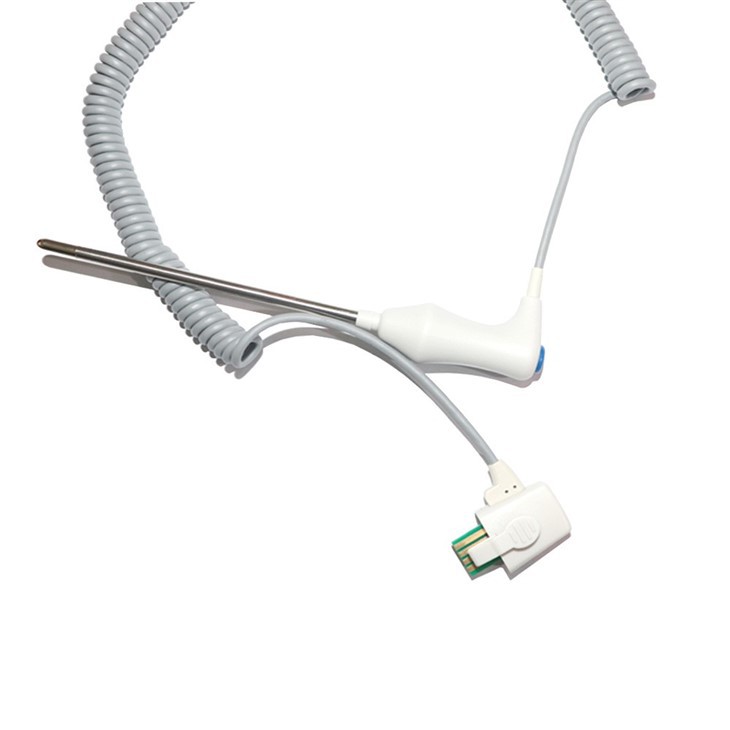
Medical Applications: In medical settings, temperature measurements are used to monitor patients' health and diagnose various conditions. A high-resolution temperature probe can detect subtle changes in body temperature, which can be an early indicator of illness or infection. For instance, Oral Temperature Probe for Welch Allyn with high resolution can provide accurate readings for monitoring fever in patients.
-
Scientific Research: Scientists often require precise temperature measurements to conduct experiments and validate theories. A temperature probe with high resolution can help researchers detect small temperature changes that may be crucial to their findings.
-
Industrial Processes: Many industrial processes are sensitive to temperature variations. A high-resolution temperature probe can ensure that the temperature is maintained within a narrow range, which is essential for product quality and process efficiency. For example, in food processing, precise temperature control is necessary to prevent spoilage and ensure food safety.
Factors Affecting Resolution
Several factors can affect the resolution of a temperature probe:
-
Sensor Technology: Different sensor technologies have different levels of sensitivity and resolution. For example, thermocouples and resistance temperature detectors (RTDs) are commonly used temperature sensors. RTDs generally offer higher resolution compared to thermocouples.
-
Signal Processing: The signal processing circuitry in a temperature probe can also affect its resolution. Advanced signal processing techniques can enhance the probe's ability to detect and display small temperature changes.
-
Calibration: Proper calibration is essential to ensure the accuracy and resolution of a temperature probe. A well-calibrated probe will provide more reliable and precise temperature measurements.
Measuring Resolution
The resolution of a temperature probe can be measured in several ways. One common method is to use a temperature source with a known temperature and measure the smallest change in temperature that the probe can detect. Another method is to use a data logger to record the temperature readings over time and analyze the smallest detectable change.

Choosing the Right Resolution
When choosing a temperature probe, it is important to consider the specific requirements of your application. Here are some factors to keep in mind:
-
Accuracy Requirements: If your application requires high accuracy, you will need a temperature probe with a high resolution.
-
Temperature Range: The temperature range of the application can also affect the choice of resolution. Some probes may have a higher resolution within a specific temperature range.
-
Cost: Higher resolution temperature probes generally come at a higher cost. You need to balance the cost with the requirements of your application.
Our Temperature Probe Offerings
As a temperature probe supplier, we offer a wide range of temperature probes with different resolutions to meet the diverse needs of our customers. For example, our Temperature Probe Adapter Cable, use With YSI400 Temperature Probe is designed to work with specific temperature probes, ensuring accurate and reliable temperature measurements. We also have Adult Skin Surface / Esophageal/ Rectal Temperature Probe, L=3m, 12mm /5.0mm Disk for medical applications, which provides high-resolution temperature measurements.
Conclusion
The resolution of a temperature probe is a critical factor that determines its performance and suitability for different applications. By understanding what resolution is, why it matters, and how to choose the right resolution for your needs, you can ensure accurate and reliable temperature measurements. If you have any questions about our temperature probes or need assistance in selecting the right product for your application, please feel free to contact us. We are here to help you make the best decision for your temperature measurement needs.
References
- "Temperature Measurement Handbook" by John Wiley & Sons
- "Principles of Temperature Measurement" by Plenum Press