


In the realm of modern surgical procedures, electrosurgical pencils have emerged as indispensable tools, offering precision and efficiency in tissue dissection and hemostasis. As a leading supplier of electrosurgical pencils, I often encounter inquiries regarding the differences between monopolar and bipolar electrosurgical pencils. This blog aims to provide a comprehensive overview of these two types of electrosurgical pencils, highlighting their unique features, applications, and advantages.
1. Basic Principles
Monopolar Electrosurgical Pencils
Monopolar electrosurgical pencils operate on a simple principle. An electrical current is delivered from the electrosurgical unit through the active electrode of the pencil to the patient's tissue. The current then returns to the electrosurgical unit via a dispersive electrode, commonly known as a Disposable Electrosurgical -Monopolar Patient Plate. This setup allows for a large area of current dispersion on the patient's body, reducing the risk of burns at the return electrode site.
The active electrode of a monopolar electrosurgical pencil can be used for various functions, such as cutting, coagulation, and fulguration. When the electrode is in contact with the tissue, the high - frequency electrical current generates heat, which can either cut through the tissue or cause it to coagulate, depending on the settings of the electrosurgical unit.
Bipolar Electrosurgical Pencils
Bipolar electrosurgical pencils, on the other hand, have two active electrodes within the pencil itself. The electrical current flows directly between these two electrodes, passing through a small volume of tissue held between them. This means that the current is confined to a very specific area, minimizing the spread of electrical energy to surrounding tissues.
The bipolar system is mainly used for hemostasis, as it can effectively seal small blood vessels by coagulating the blood within them. Since the current is restricted to the tissue between the two electrodes, there is no need for a dispersive electrode on the patient's body, which can be an advantage in certain surgical scenarios.
2. Design and Structure
Monopolar Electrosurgical Pencils
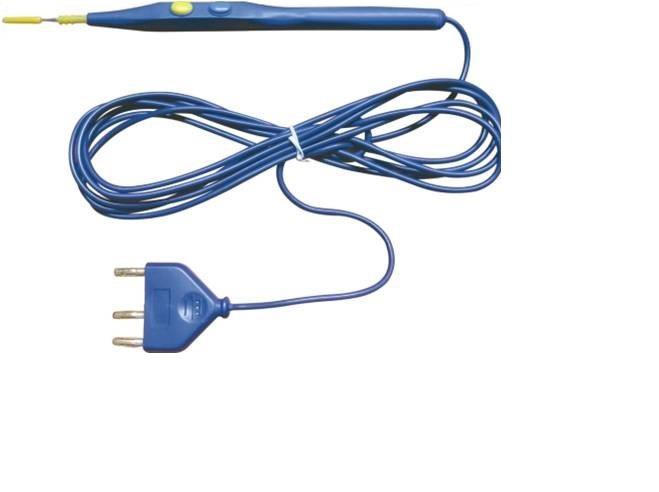
Monopolar electrosurgical pencils typically have a single, thin electrode tip. The design of the tip can vary depending on the intended use. For example, a sharp, pointed tip is suitable for precise cutting, while a blunt or ball - shaped tip is better for coagulation. The pencil is usually connected to the electrosurgical unit via a cable, and the user can control the functions (cutting or coagulation) by pressing buttons on the pencil or using a foot pedal connected to the unit.
Bipolar Electrosurgical Pencils
Bipolar electrosurgical pencils have a more complex design, with two electrodes placed close to each other at the tip. These electrodes are often in the form of forceps or tweezers, which allow the surgeon to grasp the tissue between them. The two electrodes are insulated from each other to ensure that the electrical current flows only through the tissue being held. Similar to monopolar pencils, bipolar pencils are also connected to the electrosurgical unit via a cable, and the functions can be controlled by the user.
3. Applications
Monopolar Electrosurgical Pencils
Monopolar electrosurgical pencils are widely used in a variety of surgical procedures. In general surgery, they are used for cutting and coagulating tissues during abdominal surgeries, such as appendectomies and cholecystectomies. In neurosurgery, monopolar pencils are used for precise tissue dissection, as the surgeon can control the depth and width of the cut. They are also commonly used in plastic surgery for shaping and contouring tissues.
However, due to the potential for the electrical current to spread to surrounding tissues, monopolar electrosurgical pencils need to be used with caution in areas where there are sensitive structures, such as near nerves or major blood vessels.
Bipolar Electrosurgical Pencils
Bipolar electrosurgical pencils are mainly used when hemostasis is the primary goal. They are commonly used in microsurgery, such as ophthalmic surgery and ear, nose, and throat (ENT) surgery. In ophthalmic surgery, bipolar forceps can be used to seal small blood vessels in the eye without causing damage to the delicate surrounding tissues. In ENT surgery, they are used for procedures such as tonsillectomies and nasal polypectomies, where precise hemostasis is required.
4. Advantages and Disadvantages
Monopolar Electrosurgical Pencils
Advantages:

- Versatility: Monopolar pencils can be used for both cutting and coagulation, making them suitable for a wide range of surgical procedures.
- Long - range effect: The ability to cut through relatively large volumes of tissue makes them useful in surgeries where extensive tissue dissection is required.
Disadvantages:
- Risk of tissue damage: The spread of electrical current to surrounding tissues can cause unintended burns or damage to nearby structures.
- Need for a dispersive electrode: The use of a dispersive electrode adds an extra step to the setup and requires careful placement to prevent burns.
Bipolar Electrosurgical Pencils
Advantages:
- Precise hemostasis: The confinement of electrical current to a small area allows for very precise control of hemostasis, minimizing damage to surrounding tissues.
- No need for a dispersive electrode: This simplifies the surgical setup and reduces the risk of burns associated with the return electrode.
Disadvantages:
- Limited cutting ability: Bipolar pencils are primarily designed for hemostasis and are not as effective for cutting large volumes of tissue.
- Higher cost: The more complex design of bipolar pencils often results in a higher cost compared to monopolar pencils.
5. Our Product Offerings
As a supplier of electrosurgical pencils, we offer a wide range of both monopolar and bipolar electrosurgical pencils to meet the diverse needs of our customers. Our Electrosurgical Pencil with 4cm Blade Head is a popular monopolar option, suitable for surgeries that require a longer reach and precise cutting. For bipolar applications, we also provide high - quality bipolar electrosurgical pencils with excellent hemostatic performance.
In addition, we offer accessories such as the Adapter Cable. Connect Bipolar Disposable Plate and Electrosurgical Unit to ensure seamless integration of our products with different electrosurgical units.
6. Conclusion and Call to Action
In conclusion, the choice between monopolar and bipolar electrosurgical pencils depends on the specific requirements of the surgical procedure. Monopolar pencils offer versatility and the ability to cut through large volumes of tissue, while bipolar pencils provide precise hemostasis with minimal damage to surrounding tissues.
If you are in the market for high - quality electrosurgical pencils or related accessories, we invite you to contact us for more information. Our team of experts is ready to assist you in selecting the most suitable products for your surgical needs. Whether you are a hospital, a surgical center, or a medical device distributor, we are committed to providing you with the best products and services. Reach out to us to start a procurement discussion and discover how our electrosurgical pencils can enhance the efficiency and safety of your surgical procedures.
References
- Smith, J. R., & Johnson, M. L. (2018). Electrosurgery: Principles and Practice. Surgical Clinics of North America, 98(3), 619 - 632.
- Miller, P. D., & Brown, T. A. (2019). Bipolar vs. Monopolar Electrosurgery in Modern Surgical Practice. Journal of Surgical Innovation, 26(2), 123 - 131.
- Thompson, S. E., & Davis, C. R. (2020). Advances in Electrosurgical Technology. Current Opinion in Anaesthesiology, 33(4), 521 - 527.