


Pulse oximeters are essential medical devices used to measure the oxygen saturation level in a person's blood and their pulse rate. These compact and non - invasive tools have become increasingly popular, especially with the rise in health awareness and the need for at - home health monitoring. One question that often arises is how a pulse oximeter performs in low - light conditions. As a pulse oximeter supplier, I'm here to delve into this topic and provide you with a comprehensive understanding.
How Pulse Oximeters Work
Before discussing their performance in low - light conditions, it's important to understand how pulse oximeters function. Most pulse oximeters operate based on the principle of spectrophotometry. They emit two wavelengths of light, typically red (around 660 nm) and infrared (around 940 nm), through a part of the body, usually a fingertip. Hemoglobin, the protein in red blood cells that carries oxygen, absorbs these two wavelengths of light differently depending on whether it is oxygenated or deoxygenated.
The oximeter measures the amount of light absorbed by the blood at each wavelength. By comparing the absorption ratios of red and infrared light, it can calculate the percentage of oxygen - saturated hemoglobin in the blood, known as SpO2 (peripheral oxygen saturation). The device also detects the pulsatile change in blood volume caused by the heartbeat, which allows it to measure the pulse rate.
The Impact of Light Conditions on Pulse Oximeters
Light conditions can potentially affect the performance of a pulse oximeter. In general, pulse oximeters are designed to work under a wide range of lighting conditions, including low - light environments. This is because they rely on the internal light sources (red and infrared LEDs) to measure oxygen saturation and pulse rate, rather than external light.
The internal LEDs in a pulse oximeter are powerful enough to penetrate the skin and reach the blood vessels in the fingertip. As long as the device is properly placed on the finger and there is good contact between the sensor and the skin, the internal light sources should be sufficient to obtain accurate readings.
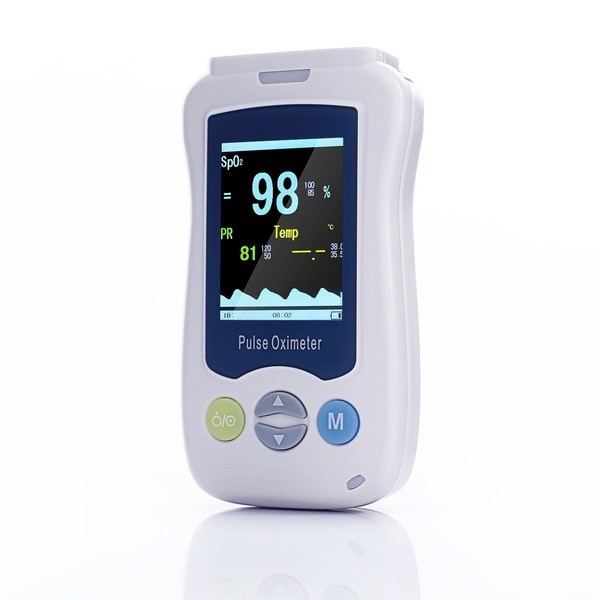
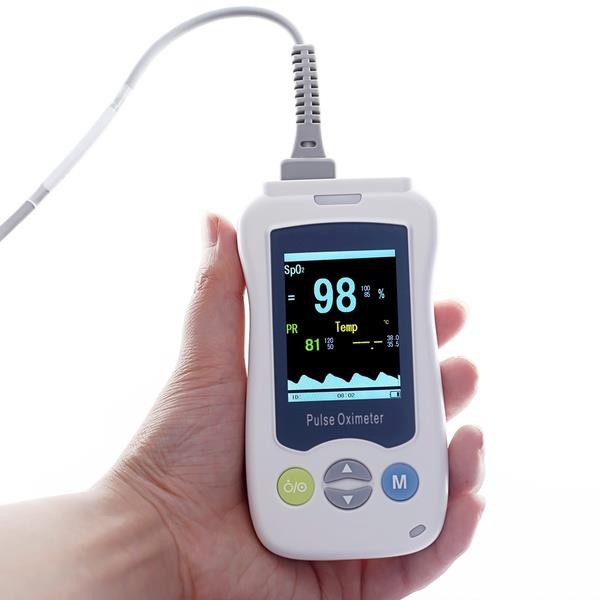
However, extremely low - light conditions can sometimes pose challenges. For example, if the room is completely dark and the user is having difficulty positioning the oximeter correctly on the finger, it might lead to inaccurate readings. Misplacement can cause the light to be scattered or blocked, resulting in inconsistent absorption measurements.
Factors Affecting Performance in Low - Light Conditions
- Sensor Design: The quality and design of the sensor play a crucial role in a pulse oximeter's performance in low - light conditions. A well - designed sensor can effectively capture the light signals and minimize the impact of external factors. Some of our products, such as the [Medical Mini Handheld Pulse Oximeter](/pluse - oximeter/medical - mini - handheld - pulse - oximeter.html), are equipped with high - sensitivity sensors that can provide accurate readings even in dimly lit environments.
- Skin Pigmentation: Skin pigmentation can also affect the performance of a pulse oximeter in low - light conditions. Darker skin may absorb more light, reducing the signal strength. However, modern pulse oximeters are designed to compensate for this to some extent. Our [OLED Display Blood Oxygen Monitor Fingertip](/pluse - oximeter/oled - display - blood - oxygen - monitor - fingertip.html) uses advanced algorithms to adjust for different skin tones, ensuring reliable readings regardless of lighting conditions.
- Motion Artifact: In low - light conditions, users may be more likely to move their fingers while using the oximeter. Motion can cause the light path between the LEDs and the detector to change, leading to inaccurate readings. To address this issue, our [Fingertip Pulse Oximeter Prince - 100B3](/pluse - oximeter/fingertip - pulse - oximeter - prince - 100b3.html) is equipped with motion - resistant technology, which helps to filter out motion artifacts and provide stable readings.
Testing in Low - Light Conditions
To ensure the performance of our pulse oximeters in low - light conditions, we conduct a series of rigorous tests. In our testing facilities, we simulate different levels of low - light environments, from dimly lit rooms to near - complete darkness. We test the oximeters on a diverse group of individuals with different skin tones and pulse rates to ensure that they can provide accurate and reliable readings under various conditions.
During the testing process, we measure the accuracy of the SpO2 and pulse rate readings and compare them with the readings obtained in normal - light conditions. We also evaluate the time it takes for the oximeter to obtain a stable reading and the consistency of the readings over time. Based on the test results, we continuously improve the design and performance of our products to ensure that they meet the highest standards of quality and accuracy.
Real - World Applications in Low - Light Conditions
Pulse oximeters have a wide range of real - world applications in low - light conditions. For example, they are commonly used in hospitals during night - time patient monitoring. Nurses need to be able to quickly and accurately measure a patient's oxygen saturation and pulse rate without disturbing the patient's sleep. Our pulse oximeters are designed to be quiet and easy to use in low - light environments, making them ideal for this type of application.
In addition, pulse oximeters are also popular among athletes and outdoor enthusiasts. They may need to monitor their oxygen levels during early morning or late - evening workouts or while camping in the wilderness. Our lightweight and portable pulse oximeters can provide reliable readings even in low - light outdoor settings, allowing users to keep track of their health and performance.
Conclusion
In conclusion, a well - designed pulse oximeter can perform effectively in low - light conditions. While extremely low - light environments may present some challenges, modern pulse oximeters are equipped with advanced technology to overcome these issues. Factors such as sensor design, skin pigmentation, and motion artifact can affect performance, but our products are designed to minimize these effects and provide accurate and reliable readings.
If you are in the market for a high - quality pulse oximeter that performs well in all lighting conditions, we invite you to explore our range of products. Whether you are a healthcare provider, an athlete, or someone who wants to monitor their health at home, we have the right solution for you. Contact us today to start a discussion about your procurement needs and discover how our pulse oximeters can meet your requirements.
References
- "Principles of Pulse Oximetry." Mayo Clinic Proceedings, 2005.
- "Effect of Lighting Conditions on Pulse Oximeter Performance." Journal of Clinical Monitoring and Computing, 2018.
- "Advances in Pulse Oximetry Technology." Biomedical Engineering Online, 2020.