


Hey there! As a supplier of ECG Leadwires - Snap, I've been getting a lot of questions lately about whether these leadwires can be used for long-term ECG monitoring. So, I thought I'd take a deep dive into this topic and share my insights with you.
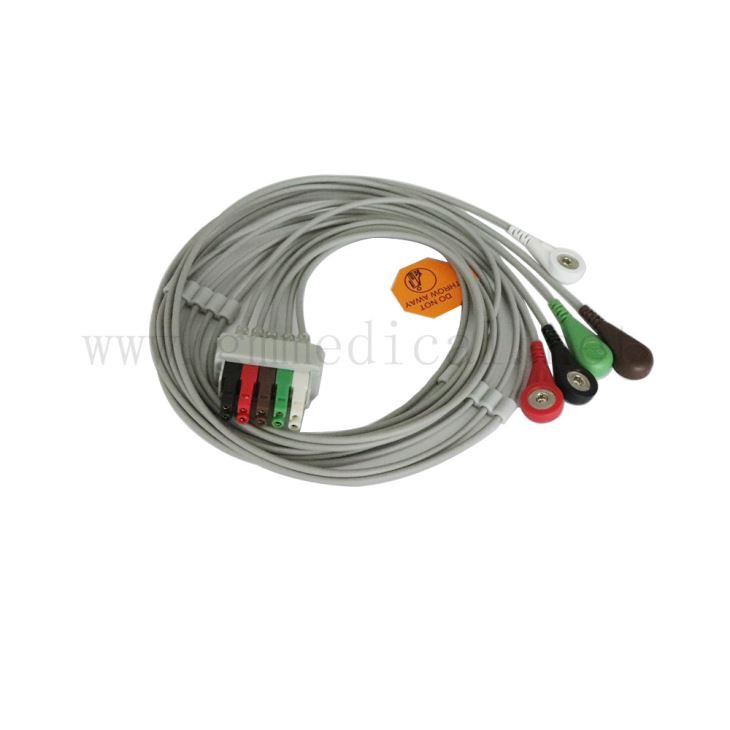

First off, let's quickly talk about what ECG Leadwires - Snap are. These leadwires are an essential part of an electrocardiogram (ECG) system. They're the cables that connect the electrodes placed on a patient's body to the ECG monitor. The "snap" part refers to the type of connector they use, which makes it easy to attach and detach the electrodes.
Now, onto the big question: Can ECG Leadwires - Snap be used in long-term ECG monitoring? Well, the short answer is yes, but there are some factors to consider.
Advantages of Using ECG Leadwires - Snap for Long-Term Monitoring
One of the main advantages of using ECG Leadwires - Snap for long-term monitoring is their ease of use. The snap connectors make it simple for healthcare providers to quickly attach and remove the electrodes as needed. This is especially important when you're dealing with long-term monitoring, as there may be times when you need to reposition the electrodes or replace them.
Another advantage is their durability. At our company, we make sure that our ECG Leadwires - Snap are built to last. They're made from high-quality materials that can withstand the wear and tear of continuous use. This means that you won't have to worry about the leadwires breaking or malfunctioning during long-term monitoring.
Let's take a look at some of our popular products. We have the GE Marquette Multi-link Leadwire Set,5-Lead , Snap ,IEC ,29in (76cm) & VS 2PIN. This leadwire set is designed to be compatible with GE Marquette monitors, and it's a great option for long-term monitoring. The 5-lead configuration provides a comprehensive view of the patient's heart activity, and the snap connectors make it easy to use.
We also offer the Compatible M1645A 5-lead Leadwires , IEC , Snap. These leadwires are compatible with a variety of monitors, and they're known for their reliability. They're a cost-effective option for long-term monitoring, especially if you're on a budget.
And then there's the Compatible With GE Medical Pro1000 Leadwire Set ,5-Lead. This leadwire set is specifically designed for use with the GE Medical Pro1000 monitor. It provides accurate and reliable readings, making it a great choice for long-term ECG monitoring.
Challenges of Using ECG Leadwires - Snap for Long-Term Monitoring
Of course, it's not all sunshine and rainbows. There are some challenges associated with using ECG Leadwires - Snap for long-term monitoring.
One challenge is the potential for skin irritation. When electrodes are left on the skin for an extended period of time, they can cause irritation or allergic reactions in some patients. This is something that healthcare providers need to keep an eye on and take steps to prevent, such as using hypoallergenic electrodes or changing the electrode placement regularly.
Another challenge is the risk of signal interference. Over time, the leadwires can become tangled or damaged, which can lead to signal interference and inaccurate readings. To minimize this risk, it's important to properly care for the leadwires and replace them if they show signs of wear and tear.
Tips for Using ECG Leadwires - Snap in Long-Term Monitoring
If you're planning to use ECG Leadwires - Snap for long-term monitoring, here are some tips to help you get the most out of them:
- Choose the right leadwires: Make sure you select leadwires that are compatible with your ECG monitor and meet your specific monitoring needs. Consider factors such as the number of leads, the length of the leadwires, and the type of connectors.
- Properly place the electrodes: Follow the manufacturer's instructions for placing the electrodes on the patient's body. Make sure the electrodes are clean and dry before attaching them, and apply them firmly to ensure good contact.
- Regularly check the leadwires: Inspect the leadwires regularly for any signs of damage, such as frayed wires or loose connectors. If you notice any problems, replace the leadwires immediately.
- Keep the leadwires organized: To prevent tangling and signal interference, keep the leadwires organized. You can use cable ties or clips to keep them in place.
- Educate the patient: If the patient is going to be wearing the leadwires for an extended period of time, educate them on how to care for the leadwires and what to do if they experience any problems.
Conclusion
In conclusion, ECG Leadwires - Snap can definitely be used in long-term ECG monitoring. They offer many advantages, such as ease of use and durability, but there are also some challenges to be aware of. By choosing the right leadwires, properly placing the electrodes, and following the tips I've shared, you can ensure accurate and reliable long-term ECG monitoring.
If you're interested in learning more about our ECG Leadwires - Snap or are looking to make a purchase, I'd love to talk to you. Feel free to reach out to us, and we can discuss your specific needs and find the best solution for you.
References
- "Electrocardiography: Principles and Practice" by Arthur Garson Jr., et al.
- "Clinical Electrocardiography: A Simplified Approach" by Frank G. Miller.