


Hey there! As a supplier of pulse oximeters, I often get asked a bunch of questions about these nifty little devices. One question that pops up quite a bit is, "Can a pulse oximeter be used on patients with anemia?" Let's dig into this topic and find out.
First off, let's quickly go over what a pulse oximeter is. A pulse oximeter is a small, non - invasive device that clips onto your finger, toe, or earlobe. It measures two important things: your oxygen saturation level (SpO₂), which shows how much oxygen is in your blood, and your heart rate. It works by shining light through your skin and measuring how much of that light is absorbed by oxygen - carrying hemoglobin in your blood.
Now, anemia is a condition where you don't have enough healthy red blood cells or hemoglobin in your blood. Hemoglobin is the protein in red blood cells that carries oxygen from your lungs to the rest of your body. When you have anemia, your body might not be getting enough oxygen because there aren't enough carriers (hemoglobin) to transport it.
So, can a pulse oximeter work for patients with anemia? Well, the short answer is yes, but with some caveats. Pulse oximeters are designed to measure the percentage of hemoglobin that is saturated with oxygen. They don't measure the actual amount of hemoglobin in your blood. So, even if a patient has anemia and a low hemoglobin count, the pulse oximeter can still give an accurate reading of the percentage of the available hemoglobin that is carrying oxygen.

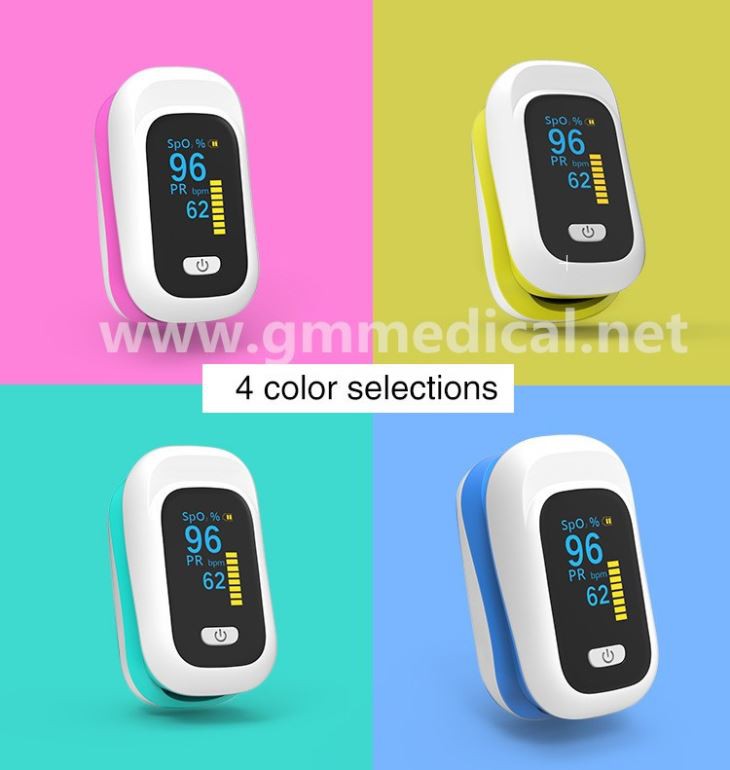
Let's say a patient has anemia, and their hemoglobin level is lower than normal. The pulse oximeter will measure the oxygen saturation of the remaining hemoglobin. For example, if a healthy person has 15 grams of hemoglobin per deciliter of blood and 98% of it is saturated with oxygen, a person with anemia might have only 8 grams of hemoglobin per deciliter. But if 98% of that 8 grams is saturated with oxygen, the pulse oximeter will still show an SpO₂ of 98%.
However, there are some limitations. In severe cases of anemia, the low number of red blood cells can affect the accuracy of the pulse oximeter reading. Since the device relies on light absorption by hemoglobin, if there aren't enough red blood cells, the signal might be weaker, and the reading could be less reliable. Also, some types of anemia, like sickle cell anemia, can cause abnormal hemoglobin molecules. These abnormal hemoglobins might absorb light differently than normal hemoglobin, which could lead to inaccurate readings.
Another factor to consider is that a normal SpO₂ reading on a pulse oximeter doesn't necessarily mean that the patient is getting enough oxygen. Even if the percentage of saturated hemoglobin is high, the total amount of oxygen being carried in the blood could still be low because there aren't enough red blood cells. So, doctors need to take into account the patient's overall clinical condition, including symptoms like fatigue, shortness of breath, and dizziness, in addition to the pulse oximeter reading.
Now, let me tell you a bit about the pulse oximeters we supply. We have a great range of products to suit different needs. Check out our Oxygen Saturation Monitor Finger Pulse Oximeter. It's a reliable and easy - to - use device that gives accurate readings. It's perfect for home use or in a medical setting.
If you're looking for something more compact, our Mini OLED Finger - Clamp Pulse Oximeter is a great option. It has a small, lightweight design, making it easy to carry around. And it still provides accurate SpO₂ and heart rate readings.
For those who need a portable and high - quality device, our OLED Portable Finger Pulse Oximeter is a top choice. It has a clear OLED display and advanced technology to ensure reliable measurements.
In conclusion, pulse oximeters can be used on patients with anemia, but healthcare providers need to be aware of their limitations. If you're in the market for a pulse oximeter, whether it's for personal use or for a medical facility, we've got you covered. We offer a variety of high - quality pulse oximeters at competitive prices.
If you're interested in purchasing our pulse oximeters or have any questions about using them on patients with anemia or other conditions, don't hesitate to reach out. We're here to help you make the right choice for your needs.
References
- West, J. B. (2012). Respiratory Physiology: The Essentials. Lippincott Williams & Wilkins.
- Lichtman, M. A., et al. (2016). Williams Hematology. McGraw - Hill Education.